


Panel discussion: The Future of the Humanities in a Disruptive World
The BTK Lendület Morals and Science Recearch Group cordially invites you to the panel discussion on
The Future of the Humanities in a Disruptive World
Debating Challenges and Opportunities
with
Karla Pollmann
Dean of the Faculty of Arts,
University of Bristol
Confirmed discussants:
Tim Crane
Tamás Demeter
István Kenesei
Gábor Kiss Farkas
Benedek Láng
Csaba Pléh
Iván Szelényi
Gábor Zemplén
The focal points of the discussion will be:
-The function of the Arts and Humanities in a Changing World: how to Innovate the Curriculum?
-What is "Progress" in the Arts and Humanities?
-Application and Commercialization in Higher Education - Opportunities and Limits
-How to Organize Successful Inter- and Multidisciplinarity in Challenge-led Research Clusters?
Date of the event: 4th of November, 2019, 10 AM
Venue of the event: Research Centre for the Humanities, 1097 Budapest, Tóth Kálmán st. 4., 7th Floor, Trapéz Room
Workshop: Urban Cultures in The Early Modern Habsburg Territories
The Institute of Philosophy, RCH, cordially invites you to its joint workshop with the National University of Public Service on
Urban Cultures in The Early Modern Habsburg Territories
Venue: National University of Public Service, Budapest, Ludovika square 2., main building, 1st floor, room Hunyadi
Date: 4 November 2019
Registration here.
Program:
10-11.15 Keynote lecture
Jaroslav Miller: A Dream World of Ideas and Crudeness of Reality: Early Modern City as an Utopia
Session I.: Town Descriptions
11.30-12.15 Ferenc Hörcher: Town descriptions and urban politics in Márton Szepsi Csombor's European Travel Journal
12.15-13.00 Katalin Simon: Urban Environment in Buda in the 18th Century
13-14.00 Lunch break
Session II.: Governing Urban Communities
14.00-14.45 István Németh: Cities, Self-government, State in the Early Modern Age. The Political Framework of Urban Life
14.45-15.30 Peter Benka: Early modern towns as language communities : The case of Upper Hungarian free royal boroughs
15.30-16.15 Adam Smrcz: Jansenism and Urban Politics in 18th-Century Hungary
16.15-16.45 Coffee break
Session III.: An Outlook on non-Habsburg territories
16.45-17.30 Krisztina Péter: Image, Print and Manuscript in Early Modern Cologne
17.30-18.15 Eszter Kovács: Montaigne as the Mayor of Bordeaux: Mapping a Political Network
Talks by Csaba Olay in Hong Kong and Cluj-Napoca
Csaba Olay gives a talk with the title “Indulgence in play and gambling: Gadamer and Csíkszentmihályi” on October 19th at the conference “Philosophy of Gambling” at Macau University, and a talk with the title “Nancy’s early theory of community” on October 24th in the Institute of Philosophy of Chinese University Hong Kong. He gave the lecture “Implicit regional identity and explicit national identity” on October 8th in the Institute of Advanced Studies of the Babes-Bolyai University of Sciences (UBB-STAR).
Conference: Mental Fictionalism
The MTA BTK Lendület "Morals and Science" Reasearch Group cordially invites you to its upcoming conference on
Mental Fictionalism
Date: 24-25 October 2019
Helyszín: Institute of Philsophy, Research Centre for the Humanities, 1097 Budapest, 4 Tóth Kálmán str.
For the detailed program see conference poster.
Paper presented by Ferenc Hörcher in Detroit
Ferenc Hörcher presents a talk at the annual conference of the Philosophy of the City Research Group, organised in the Law School and the School of Architecture of the University of Detroit Mercy, established by the Jesuits. His paper is scheduled on 4 Oct, 2019, with the title The Political Philosophy of the European City: The Conceptual Framework.
Workshop: Ernest Nagel and the Making of Philosophy of Science
The MTA Lendület Morals and Science Research Group cordially invites you to its upcoming conference on
Ernest Nagel and the Making of Philosophy of Science as a Profession
Date: 4th of October, 2019.
Venue: 1097 Budapest, 4. Toth Kalman st., 7th floor
Organizers: Matthias Neuber (Universität Tübingen) and Ádám Tamás Tuboly (BTK Institute of Philosophy, PTE ITD).
For details see poster.
Talk by Ferenc Hörcher at Princeton University
Ferenc Hörcher gives a talk at the Department of Philosophy of Princeton University, with the title Philosophy, Literature and the Author’s Life: Nietzsche and Thomas Mann. The talk is presented in Alexander Nehamas’s graduate seminar on Nietzsche on 1 October 2019.
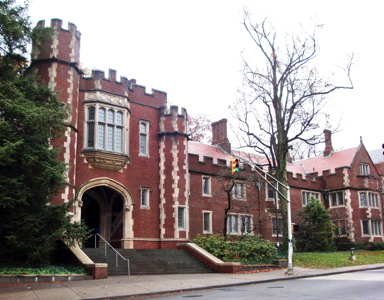
Ference Hörcher’s talk on British conservative thinker in Lisbon
Ferenc Hörcher presents a paper entitled The Poetry of the Past: Oakeshott’s Uncommon Rhetoric of Common Sense Conservatism in Lisbon on 21 September 2019. The talk of our Institute's senior fellow is part of the 10th Anniversary Conference of the international Michael Oakeshott Association, held at the Institute of Political Studies of the Catholic University of Portugal. The programme of the conference is available here.
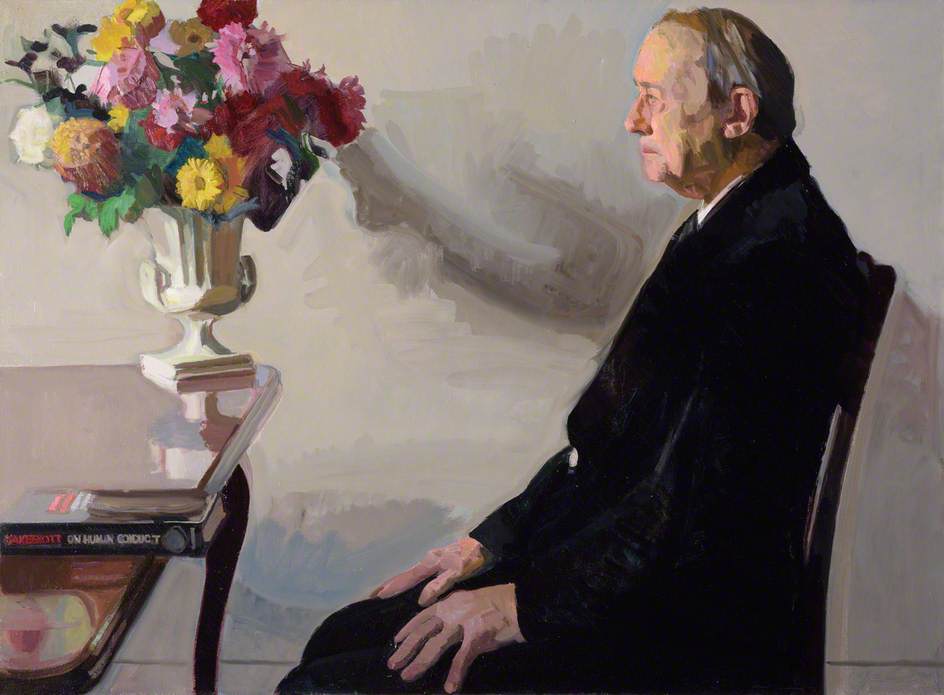
Paul Gopal-Chowdhury, Portrait of Michael Oakeshott (Image: Gaius & Caius College, University of Cambridge)
More Articles …
Page 19 of 60


